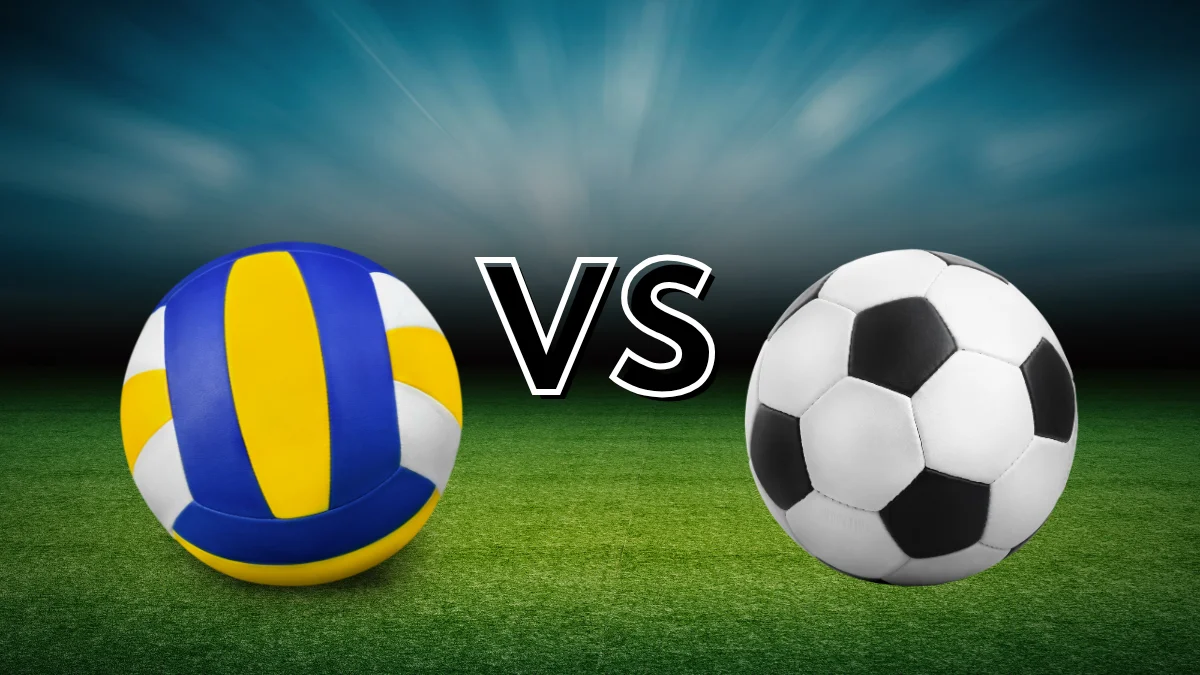
Volleyball and soccer balls may seem similar, but they serve different purposes. Both sports use a ball, but their design and usage differ.
Comparing a volleyball to a soccer ball can help you understand their unique features. Knowing these differences is useful for players, coaches, and sports enthusiasts. This guide will explore how each ball is constructed, their size variations, and how they affect gameplay.
Whether you are a beginner or a seasoned player, understanding these distinctions can enhance your experience. Learn how the right ball choice can improve your skills and enjoyment of the game. Let’s dive into the details of volleyball and soccer balls.
Ball Shape And Design
When comparing the design of volleyballs and soccer balls, understanding the differences in shape and material is crucial. Each ball is designed to meet the unique needs of its sport, impacting gameplay and athletic performance. Let’s delve into the specifics of ball shape and design to see how these sports equipment vary.
Differences In Shape
Volleyballs and soccer balls have distinct shapes tailored to their respective sports. These differences affect how they move and perform during a game.
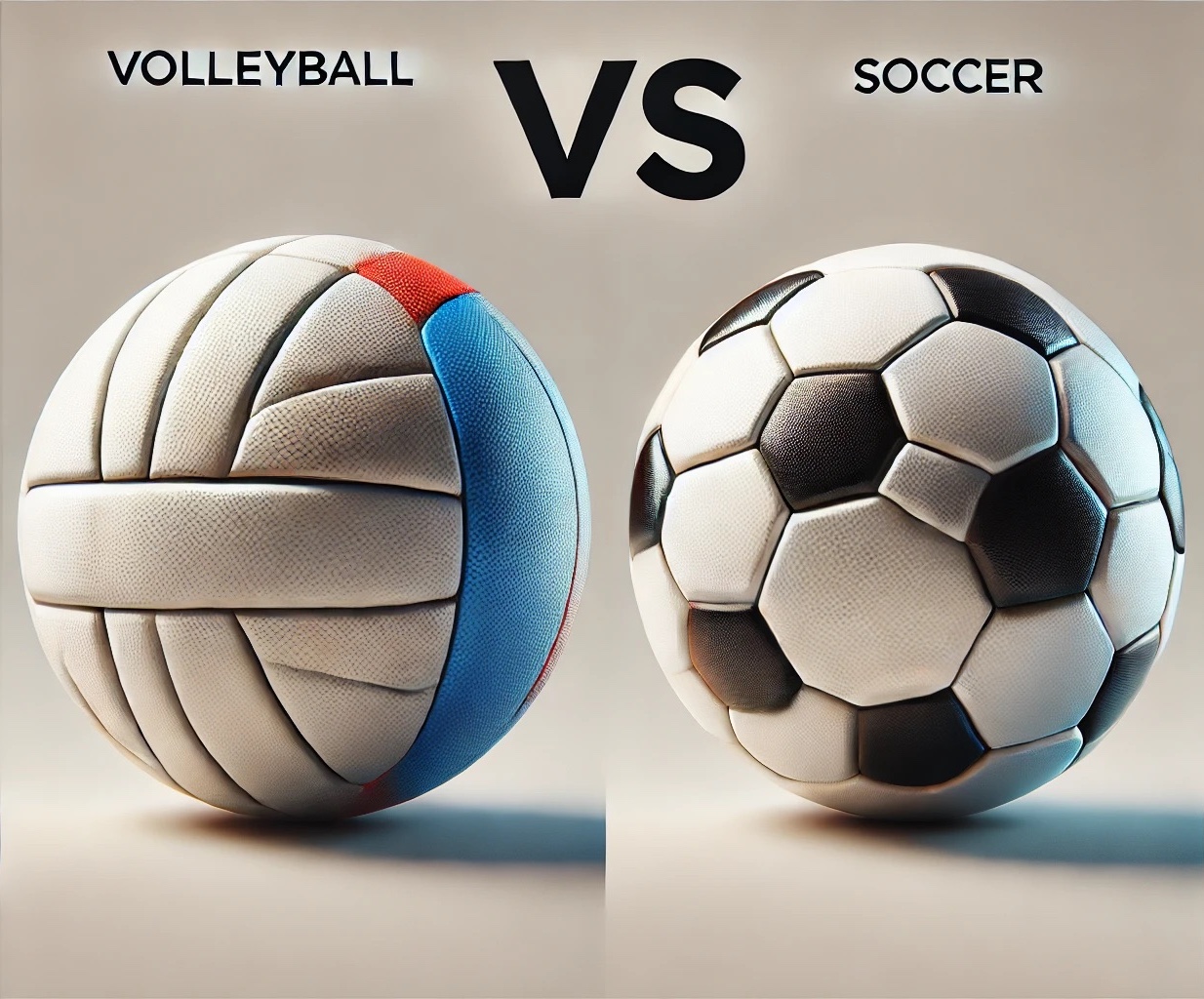
Volleyballs are usually round with a circumference of about 65-67 cm. They are designed to be lightweight and easy to hit with the hands. The round shape ensures consistent flight and predictable movements. This is vital for accurate serves and spikes.
Soccer balls, on the other hand, have a slightly larger circumference of 68-70 cm. They are also round but tend to be heavier. The design allows for better control with the feet. Soccer balls usually have 32 panels stitched together, which helps with aerodynamics and stability during flight.
| Ball Type | Shape | Circumference | Weight |
|---|---|---|---|
| Volleyball | Round | 65-67 cm | 260-280 grams |
| Soccer Ball | Round | 68-70 cm | 410-450 grams |
These differences in shape and size directly influence gameplay differences in each sport. The lighter and smaller volleyball is easier to set and spike, while the larger, heavier soccer ball is designed for kicking and requires more force.
Material Used
The materials used in manufacturing volleyballs and soccer balls play a significant role in their performance characteristics and durability.
Volleyballs are typically made from synthetic leather or genuine leather. The outer material is soft to ensure comfortable handling and minimize impact on the hands. The inner bladder, made of rubber or latex, provides the necessary bounce and shape retention.
Soccer balls are constructed with a variety of materials to enhance durability and performance. The outer layer, or cover, is usually made from synthetic leather, polyurethane, or PVC. This ensures the ball can withstand rigorous kicking and outdoor conditions. Inside, soccer balls have a rubber bladder for air retention and shape stability.
- Volleyballs:
- Outer Material: Synthetic leather, genuine leather
- Inner Bladder: Rubber, latex
- Soccer Balls:
- Outer Material: Synthetic leather, polyurethane, PVC
- Inner Bladder: Rubber
The material composition of each ball type is chosen to meet the demands of the sport. Volleyballs need to be light and soft for hand strikes, while soccer balls must be tough and durable for kicking. These sport-specific features ensure each ball performs optimally in its respective game.
Credit: www.javelinsportsinc.com
Playing Surface
When discussing Volleyball Vs Soccer Ball, one major aspect to consider is the playing surface. The surface on which a game is played significantly affects the ball design, player dynamics, and overall game mechanics. Understanding these differences can help players improve their athletic training and performance in both sports.
Indoor Vs Outdoor
Indoor sports and outdoor games have distinct playing surfaces that influence the game mechanics and ball design. For volleyball, indoor courts are usually made of wood or synthetic materials, offering a smooth and even surface. This ensures a consistent bounce and predictable ball movement, which is crucial for setting, spiking, and serving.
Soccer, on the other hand, is predominantly played outdoors on natural grass or artificial turf. The playing surface can vary greatly due to weather conditions, leading to unpredictable ball behavior. Here’s a quick comparison:
| Volleyball | Soccer |
|---|---|
| Indoor courts (wood/synthetic) | Outdoor fields (grass/turf) |
| Consistent bounce | Variable bounce |
| Predictable ball movement | Unpredictable ball movement |
These differences affect not only the sports equipment used but also the strategies and techniques employed by players. While volleyball players benefit from the controlled environment of indoor courts, soccer players must adapt to various outdoor conditions, making each game unique and challenging.
Impact On Game Play
The playing surface has a significant impact on gameplay in both volleyball and soccer. For volleyball, the smooth, even surface of indoor courts allows for precise ball control and fast-paced rallies. Players can focus on their techniques without worrying about uneven ground. This leads to more consistent serves, sets, and spikes, which are essential for high-level play.
In soccer, the outdoor playing surface introduces an element of unpredictability. Weather conditions such as rain can make the field slippery, affecting ball control and player dynamics. The soccer ball may bounce differently on grass compared to turf, and players must continuously adjust their strategies. This unpredictability can influence the outcome of the game, making adaptability a crucial skill for soccer players.
Both sports demand different types of athletic training to optimize performance. Volleyball players often focus on agility and precision drills suited for indoor environments. Soccer players, however, need to train for endurance and adaptability, preparing for various outdoor conditions.
In summary, the playing surface in volleyball and soccer significantly impacts game mechanics and player dynamics. Understanding these differences can help athletes tailor their training programs to improve their performance in either sport.
Game Rules
Understanding the game rules of Volleyball and Soccer is essential for both players and fans. Each sport has unique regulations that shape how the game is played. Let’s delve into the specifics of their scoring systems and fouls and penalties.
Scoring Systems
Both Volleyball and Soccer have distinct scoring systems that determine the winner of a match. In Volleyball, the primary objective is to score points by landing the ball on the opponent’s court. Matches are generally played in a best-of-five sets format. A team must score 25 points to win a set, provided they have at least a two-point lead. If the match goes to a fifth set, the team needs to score 15 points to win, again with a two-point lead.
In Soccer, the scoring system is straightforward: the team that scores the most goals wins. A goal is scored when the entire ball crosses the goal line between the goalposts and beneath the crossbar. Soccer matches are played in two 45-minute halves. If the score is tied at the end of regulation time, some competitions allow for extra time or a penalty shootout to determine the winner.
Here is a quick comparison of the scoring systems in a table format:
| Sport | Scoring Method | Winning Criteria |
|---|---|---|
| Volleyball | Points by landing the ball on opponent’s court | Best of five sets, 25 points per set with a two-point lead |
| Soccer | Goals | Most goals scored in two 45-minute halves |
Fouls and Penalties
Understanding the fouls and penalties in Volleyball and Soccer is crucial for fair play. In Volleyball, common fouls include touching the net, stepping over the service line while serving, and double-hitting the ball. Penalties for these fouls typically result in the opposing team earning a point and the serve.
Soccer has a more complex system of fouls and penalties. Common fouls include tripping, pushing, and handling the ball with hands. Penalties can range from free kicks to yellow or red cards, depending on the severity of the foul. A yellow card serves as a warning, while a red card results in the player’s ejection from the game. A team with a player ejected must continue the match with one less player.
Here’s a summary of common fouls and their penalties:
- Volleyball:
- Touching the net: Opponent earns a point
- Stepping over the service line: Opponent earns a point
- Double-hit: Opponent earns a point
- Soccer:
- Tripping: Free kick for the opponent
- Pushing: Free kick for the opponent
- Handball: Free kick or penalty kick
- Yellow card: Warning
- Red card: Ejection from the game
Both sports have their own set of game rules that players must follow to ensure fair play. These rules, along with their scoring systems, make each sport unique and exciting in its own way.
Player Positions
When discussing Volleyball vs Soccer Ball, it’s essential to understand the distinct player positions in each sport. Both games require specific roles that contribute to the overall team strategy and performance. Knowing these positions helps improve ball handling and athletic performance, making the game more enjoyable and competitive.
Volleyball Positions
In Volleyball, each player has a specific role on the court. These positions are crucial for executing game strategies and ensuring effective ball handling. Here are the main volleyball positions:
- Setter: The playmaker who sets up the ball for attackers.
- Outside Hitter: Often the primary attacker, responsible for scoring points.
- Opposite Hitter: Attacks from the right side and blocks the opponent’s outside hitter.
- Middle Blocker: Focuses on blocking and quick attacks at the net.
- Libero: A defensive specialist who excels at receiving serves and digging spikes.
- Defensive Specialist: Similar to the libero but can also play in the front row.
Each position in Volleyball requires specific skills and physical attributes. For example, setters need quick reflexes and precise ball handling. Middle blockers need height and jumping ability. Effective communication and teamwork are crucial for success in Volleyball.
Soccer Positions
Soccer positions are diverse and each player has a unique role on the field. These positions contribute to the team’s overall game strategies and athletic performance. Here are the primary soccer positions:
- Goalkeeper: The last line of defense, responsible for stopping shots on goal.
- Defenders: Includes center-backs and full-backs, focusing on preventing the opposition from scoring.
- Midfielders: Bridge the defense and attack, controlling the game’s flow and distributing the soccer ball.
- Forwards: The main attackers, tasked with scoring goals and creating offensive opportunities.
Within these primary categories, there are more specific roles, such as:
- Central Midfielder: Orchestrates play from the center of the field.
- Wingers: Provide width and deliver crosses from the sidelines.
- Strikers: Focus on finishing and scoring goals.
Each Soccer position demands a different skill set. Goalkeepers need excellent reflexes and positioning. Defenders require strength and tactical awareness. Midfielders must have stamina and vision. Forwards need speed and finishing ability. Understanding these roles helps in improving team coordination and performance on the field.
Skill Set Required
Volleyball and soccer are two popular sports, each requiring a unique set of skills. Understanding these skills can help players excel on the court or field. Both sports demand physical fitness, strategy, and specialized techniques. This section will explore the specific techniques needed for volleyball and soccer players.
Techniques In Volleyball
Volleyball players need a variety of techniques to succeed. Key skills include serving techniques, footwork, and ball handling techniques.
- Serving Techniques: Serving is crucial in volleyball. Players can use different serves like the underhand serve, overhand serve, and jump serve. Each type requires a specific motion and timing.
- Footwork: Good footwork helps players move quickly and efficiently. Proper footwork is essential for setting, spiking, and blocking. Players must be able to move side-to-side and forward-backward with ease.
- Ball Handling Techniques: Ball control is vital. This includes passing, setting, and spiking. Players need to practice these skills regularly to improve their accuracy and effectiveness.
Understanding player positions is also essential. Each position requires different skills:
| Position | Skills Required |
|---|---|
| Setter | Excellent passing and quick decision-making |
| Libero | Strong defensive skills and ball control |
| Outside Hitter | Powerful spikes and good blocking |
Game strategies are also important. Teams need to work together to set up plays and anticipate the opponent’s moves. Effective communication and teamwork are key to success in volleyball.
Techniques In Soccer
Soccer players also require a range of techniques. Important skills include dribbling techniques, passing techniques, and footwork.
- Dribbling Techniques: Dribbling is essential for moving the soccer ball across the field. Players must be able to control the ball while running at various speeds.
- Passing Techniques: Accurate passing is crucial in soccer. Different types of passes include short passes, long passes, and through passes. Players must practice these to improve their precision and timing.
- Footwork: Good footwork helps players maneuver around defenders. It includes skills like turning, stopping, and changing direction quickly.
Understanding player positions in soccer is also important. Each position requires specific skills and techniques:
| Position | Skills Required |
|---|---|
| Forward | Strong shooting and dribbling |
| Midfielder | Good passing and ball control |
| Defender | Strong tackling and positioning |
| Goalkeeper | Quick reflexes and good ball handling |
Game strategies play a crucial role in soccer. Teams need to plan their attacks and defenses carefully. Effective communication and teamwork are essential for creating scoring opportunities and preventing goals.

Credit: www.youtube.com
Popularity And Global Reach
Volleyball Vs Soccer Ball: Comparing these two popular sports reveals much about their Popularity and Global Reach. Both games captivate millions globally, with distinct regional preferences and major competitions that showcase their unique appeal. This section delves into the geographical popularity and the significant tournaments that define these sports.
Regional Preferences
Regional Preferences play a crucial role in the popularity of Volleyball and Soccer Ball. Each sport has a unique following in different parts of the world.
Volleyball is highly popular in countries like Brazil, the USA, Russia, Japan, and Italy. The sport enjoys a strong presence in Europe and Asia. In contrast, its presence in Africa and the Middle East is growing but still developing. Beach volleyball, a variant, is particularly popular in coastal regions.
Soccer Ball or football, as it is known outside the USA, dominates in Europe, South America, and Africa. Countries like Brazil, Argentina, Germany, and Spain have a rich soccer culture. Asia and North America also have significant followings, with leagues and clubs gaining popularity.
The table below highlights the regions where each sport is most popular:
| Sport | Popular Regions |
|---|---|
| Volleyball | Brazil, USA, Russia, Japan, Italy |
| Soccer Ball | Europe, South America, Africa |
Sport Culture also varies by region. Volleyball emphasizes teamwork and agility, appealing to countries valuing coordination and strategy. Soccer’s emphasis on athletic performance and individual skills resonates with regions passionate about dynamic and fast-paced sports.
Major Competitions
Major Competitions are a testament to the popularity and global reach of Volleyball and Soccer Ball. These events draw massive audiences and showcase the best talents in each sport.
In Volleyball, the FIVB Volleyball World Championships and the Olympic Games are significant events. The FIVB World Cup and various continental championships like the CEV European Championship are also important. Beach volleyball has its premier events like the FIVB Beach Volleyball World Championships.
For Soccer Ball, the FIFA World Cup stands out as the most prestigious tournament. UEFA Champions League, Copa America, and the UEFA European Championship are also vital. These competitions attract worldwide attention and feature the top national and club teams.
Here is a list of some major competitions in both sports:
- Volleyball:
- FIVB Volleyball World Championships
- Olympic Games
- FIVB World Cup
- CEV European Championship
- FIVB Beach Volleyball World Championships
- Soccer Ball:
- FIFA World Cup
- UEFA Champions League
- Copa America
- UEFA European Championship
- CONCACAF Gold Cup
These competitions highlight the gameplay differences and the equipment specifications unique to each sport. They also emphasize the global passion and cultural significance of both volleyball and soccer.
Physical Benefits
Volleyball and soccer are popular sports with unique physical benefits. Both activities engage the body in different ways, promoting fitness and health. Understanding these physical benefits can help you choose which sport is best for you.
Fitness Aspects
Both volleyball and soccer offer significant fitness benefits, but they differ in their physical demands.
Volleyball focuses on short bursts of energy and quick reflexes. Players frequently jump, spike, and dive, enhancing their agility and coordination.
- Cardiovascular Health: Short, intense rallies help improve heart health.
- Muscle Strength: Jumping and spiking build leg and arm muscles.
- Flexibility: Diving and reaching for the ball increase flexibility.
Soccer involves continuous running, which boosts endurance and cardiovascular fitness. Players need to sprint, dribble, and tackle, enhancing overall body strength.
- Stamina: Long-duration running builds endurance.
- Lower Body Strength: Kicking and sprinting strengthen leg muscles.
- Coordination: Dribbling and passing improve hand-eye coordination.
Both sports provide a full-body workout, but the focus areas differ. Volleyball enhances upper body strength and flexibility, while soccer boosts lower body strength and stamina.
Injury Risks
Understanding the injury risks associated with each sport is crucial. Both volleyball and soccer have common injury patterns, but they vary in type and frequency.
Volleyball injuries often result from repetitive motions and high-impact landings.
- Ankle Sprains: Common due to jumping and landing.
- Shoulder Injuries: Repeated spiking can strain the shoulder.
- Knee Injuries: Frequent bending and jumping can lead to knee problems.
Soccer injuries are often caused by collisions and overuse.
- Sprains and Strains: Common in legs due to running and sudden stops.
- Concussions: Resulting from head collisions.
- Knee Injuries: Common due to sudden direction changes.
Both sports have their injury risks. Volleyball injuries often involve the upper body, while soccer injuries are more common in the lower body. Choosing the right sport involves considering these risks and taking preventive measures.
Cultural Significance
The cultural significance of sports like volleyball and soccer is immense. Both games have their unique impact on communities and nations around the world. These team sports not only entertain but also unite people, fostering a sense of belonging and pride. The ball design of each sport plays a role in its cultural identity, with the volleyball and soccer ball symbolizing much more than just athletic equipment. Let’s explore the cultural events and famous players that highlight the cultural significance of these sports.
Cultural Events
Volleyball and soccer are celebrated through various cultural events worldwide. These events highlight the importance of these sports in different societies.
Volleyball:
- Olympic Games: Volleyball has been a part of the Summer Olympics since 1964, drawing global attention and celebrating athletic excellence.
- FIVB Volleyball World Championships: This event, held every four years, showcases the world’s top volleyball teams, highlighting the sport’s global appeal.
- Beach Volleyball: Beach volleyball tournaments, such as the AVP Tour and FIVB Beach Volleyball World Tour, attract fans to sunny destinations, blending sport and leisure.
Soccer:
- FIFA World Cup: This event, held every four years, is the most-watched sporting event globally, uniting fans from diverse cultures.
- UEFA Champions League: Club teams from across Europe compete in this prestigious tournament, showcasing top-tier soccer talent.
- Copa America: South America’s premier soccer competition highlights the rich soccer traditions of nations like Brazil, Argentina, and Uruguay.
Famous Players
Famous players in volleyball and soccer have left an indelible mark on the sport, inspiring new generations of athletes.
Volleyball:
- Karch Kiraly: A three-time Olympic gold medalist, Kiraly is considered one of the greatest volleyball players of all time.
- Giba: This Brazilian player has won numerous awards, including the FIVB World Championship MVP, and is known for his dynamic play.
- Lang Ping: A legendary player and coach, Lang Ping has led China to multiple Olympic gold medals, both as a player and a coach.
Soccer:
- Pelé: Often regarded as the greatest soccer player of all time, Pelé’s skill and charisma brought global attention to the sport.
- Diego Maradona: Known for his incredible talent and controversial moments, Maradona remains a cultural icon in soccer history.
- Lionel Messi: With numerous Ballon d’Or awards, Messi continues to break records and inspire millions of fans worldwide.
These players, through their exceptional performance and dedication, have significantly influenced the cultural significance of volleyball and soccer. Their legacy continues to inspire young athletes in recreational activities and professional sports alike.
Frequently Asked Questions
What are the Size Differences?
A volleyball is typically 65-67 cm in circumference. A soccer ball is usually 68-70 cm.
Are Volleyballs And Soccer Balls Made of the Same Materials?
Volleyballs are made of leather or synthetic leather. Soccer balls are usually made of synthetic leather and rubber.
Which Ball is Heavier?
A soccer ball weighs 410-450 grams. A volleyball weighs between 260-280 grams.
Can You Use a Soccer Ball For Volleyball?
Using a soccer ball for volleyball is not recommended. It can cause injury due to its heavier weight.
Bottom Line
Choosing between a volleyball and a soccer ball depends on your interests. Volleyballs are lighter and designed for indoor and beach play. Soccer balls are heavier and meant for outdoor fields. Each sport offers unique challenges and excitement. Whether you prefer spiking or kicking, both sports keep you active.
Try both to see which you enjoy more. Playing either sport can improve fitness and teamwork skills. So, grab a ball and start playing today!