A soccer team has 11 players on the field. This includes one goalkeeper and ten outfield players.
Soccer is a beloved sport worldwide, known for its fast-paced and strategic gameplay. Understanding the number of players on a team is essential for new fans and aspiring players alike. Each position on the field has its own role and importance.
Knowing the structure of a soccer team helps you appreciate the game better. In this blog, we will explore the roles and responsibilities of these 11 players. Whether you’re new to soccer or looking to deepen your knowledge, this guide will be your starting point. Let’s dive into the world of soccer teams and their players.
Team Composition
Soccer is a popular sport all over the world. One common question is about the number of players on a soccer team. Understanding the team composition is important for fans and players alike. Let’s explore how many players are on the field and the role of substitutes and reserves.
Players On The Field
A standard soccer team has 11 players on the field. These players include:
- 1 Goalkeeper
- 10 Outfield players
The outfield players are split into three groups:
| Position | Number of Players |
|---|---|
| Defenders | Usually 4 |
| Midfielders | Usually 4 |
| Forwards | Usually 2 |
These numbers can change based on the coach’s strategy. But, the total must always be 11. This balance is key to the game. It ensures that teams have both offense and defense.
Substitutes And Reserves
Teams are also allowed to have substitutes and reserves. These players do not start the game. But, they can replace players on the field. Substitutions are important for various reasons:
- Injuries: If a player gets hurt, a substitute can take their place.
- Tactics: Coaches might change players to adjust their strategy.
- Fatigue: Players get tired, and fresh legs can make a big difference.
In most competitions, teams can have up to 7 substitutes on the bench. But, they can only use 3 to 5 of them during the match. This number depends on the rules of the competition. For example, in some tournaments, 5 substitutions are allowed.
Reserves are often used in long tournaments. They are extra players who can join the squad if needed. This ensures that the team always has enough players. It’s a good strategy for dealing with unexpected issues.
Official Rules
Soccer is a popular sport worldwide, known for its fast pace and teamwork. Understanding the number of players on a team is crucial for both players and fans. The official rules set by governing bodies like FIFA determine the standard number of players. However, different leagues may have slight variations. This post will explore the official rules and variations by league.
Fifa Regulations
The Federation Internationale de Football Association (FIFA) sets the standard rules for soccer. According to FIFA regulations, each soccer team consists of 11 players on the field. This includes one goalkeeper and ten outfield players. The outfield players are divided into three main positions: defenders, midfielders, and forwards.
Key points about FIFA regulations:
- A team must have at least seven players to start a match.
- Substitutions are allowed during the game, usually up to three.
- If a team has fewer than seven players due to injuries or red cards, the match is abandoned.
Additionally, FIFA also allows for up to 12 substitutes to be named before the match. This means a team can bring extra players to the game, but only three can be used as substitutes during the match.
Variations By League
While FIFA sets the standard rules, different leagues around the world might have slight variations. These changes can depend on the level of play, age groups, or specific league rules.
Professional leagues: Most professional leagues, like the English Premier League or La Liga, follow FIFA’s 11-player rule. However, some leagues allow more substitutions during the game. For example, during certain tournaments, teams may use up to five substitutes.
Youth leagues: Youth soccer leagues often have different rules to accommodate younger players. Teams might have fewer players on the field, such as 7-a-side or 9-a-side games. This helps younger players develop skills and ensures everyone gets to play.
Amateur leagues: In amateur or recreational leagues, the number of players can vary. Some leagues might allow more substitutions, or even unlimited substitutions, to keep the game fun and inclusive.
| Type of League | Number of Players | Substitutions |
|---|---|---|
| Professional Leagues | 11 players | Usually 3, sometimes up to 5 |
| Youth Leagues | 7 to 9 players | Varies by age group |
| Amateur Leagues | Varies | Often unlimited |
Understanding these variations helps players and fans enjoy the game better. Different rules can make each match unique and exciting.
Position Types
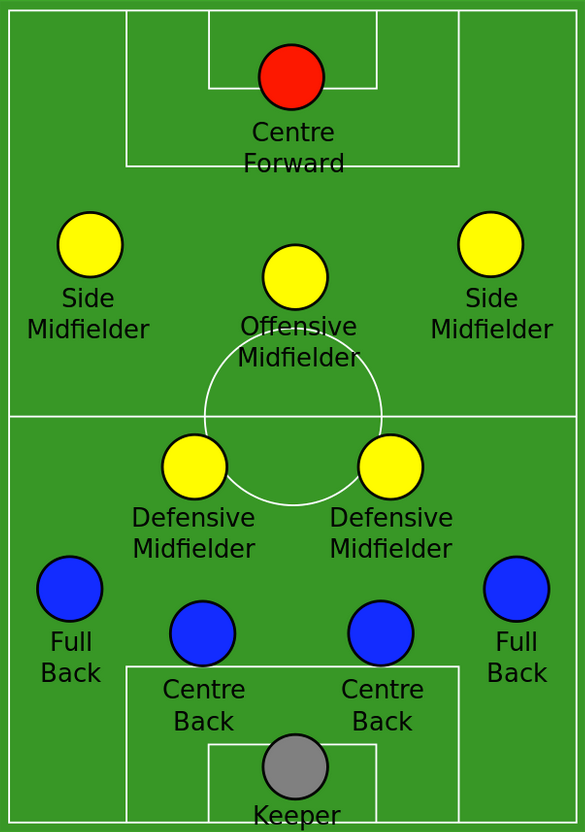
Soccer is a popular sport enjoyed by many around the world. Understanding how many players are on a team and their positions can help both players and fans. This knowledge is essential for Youth Soccer Team Rules. A standard soccer team has 11 players on the field. Each player has a specific role. These roles are divided into offensive and defensive. Let’s explore the different position types and their responsibilities.
Offensive Roles
Offensive soccer players are crucial in creating scoring opportunities. They focus on attacking the opponent’s goal. Here are the primary offensive roles:
- Forwards: These players are the main goal-scorers. They stay near the opponent’s goal to take shots.
- Wingers: Positioned on the sides, wingers use their speed to cross the ball to forwards.
- Attacking Midfielders: They create scoring chances by controlling the ball and making key passes.
Each offensive player has specific Soccer Player Responsibilities. Forwards need to be quick and have excellent shooting skills. Wingers must be fast and good at crossing the ball. Attacking midfielders should have great vision and passing abilities. The Soccer Team Composition can vary based on the coach’s strategy.
Defensive Roles
Defensive soccer players focus on preventing the opponent from scoring. They play a vital role in maintaining the team’s structure. Key defensive roles include:
- Goalkeeper: The only player allowed to use their hands. Their job is to stop shots on goal.
- Center Backs: These players defend the middle of the field. They block shots and clear the ball.
- Full Backs: Positioned on the sides, full backs prevent wingers from crossing the ball.
- Defensive Midfielders: They protect the defense and help in controlling the midfield.
Soccer Team Roles are crucial in a match. The Football Team Size remains 11 players, but the formation can change. For instance, a 4-4-2 formation includes four defenders, four midfielders, and two forwards. Each player must understand their Soccer Positions and work as a team. This balance is essential for a successful match.
Credit: www.vox.com
Youth Teams
Understanding the number of soccer players on a team can be confusing. Youth teams have specific rules that vary by age. It’s important to know these details to ensure teams are playing correctly. Let’s explore the rules for youth soccer teams.
Age Categories
Youth soccer teams are divided into different age categories. Each category has unique rules. This helps to ensure fair play and development. Here are some common age categories:
- Under 6 (U6)
- Under 8 (U8)
- Under 10 (U10)
- Under 12 (U12)
- Under 14 (U14)
- Under 16 (U16)
- Under 18 (U18)
Each age group has different rules for the number of players. Younger age groups often play with fewer players. This helps them learn the game better.
Player Limits
The number of players on a team varies with age. Here is a simple breakdown of player limits:
| Age Category | Number of Players |
|---|---|
| Under 6 (U6) | 3 vs 3 or 4 vs 4 |
| Under 8 (U8) | 4 vs 4 or 5 vs 5 |
| Under 10 (U10) | 6 vs 6 or 7 vs 7 |
| Under 12 (U12) | 8 vs 8 or 9 vs 9 |
| Under 14 (U14) | 11 vs 11 |
| Under 16 (U16) | 11 vs 11 |
| Under 18 (U18) | 11 vs 11 |
For younger players, smaller team sizes are beneficial. This allows them to have more touches on the ball. As players get older, team sizes increase. This prepares them for full-size matches.
International Matches
Understanding the number of soccer players on a team is crucial for both fans and players. In international matches, the rules are set by governing bodies like FIFA. This ensures fair play and standardized team sizes across the globe. Let’s dive into the specifics of national team sizes and tournament regulations.
National Team Sizes
A national soccer team usually has a total of 23 players. This includes both starters and substitutes. The Player Roster Limits are essential for managing the team effectively. Here are the typical roles within a national team:
- 11 Starting players
- 12 Substitute players
These roles ensure that the team can handle injuries and tactical changes. The Football Squad Sizes are designed to provide flexibility. Coaches often use substitutes to maintain energy levels and adapt to the game’s flow.
In Youth Soccer Team Sizes, the numbers can vary. Younger leagues might have smaller squads, usually around 15 players. This helps to ensure that all players get a chance to play and develop their skills.
Here’s a table summarizing the typical national team sizes:
| Team Type | Number of Players |
|---|---|
| National Team | 23 |
| Youth Team | 15 |
Tournament Regulations
Tournament regulations play a significant role in shaping team sizes. In official competitions, FIFA Regulations dictate the number of players allowed. During the World Cup, each team can register 23 players. These include:
- 11 Starters
- 12 Substitutes
Player Substitutions are vital in tournaments. Teams can use up to three substitutes in a match. This allows for strategic changes and managing player fatigue. Squad Depth becomes crucial in such scenarios, as teams need strong backups.
In Competitive League Rules, teams might have larger squads. This is to cover a long season with many matches. Clubs often have Soccer Team Composition of around 25 to 30 players. This ensures they have enough cover for all positions.
International Soccer Teams follow similar guidelines. They need to register their squads before the tournament starts. Any changes due to injuries must be approved by the organizing body.
Understanding Team Formation is also essential. Coaches decide formations based on the players available. This can change depending on the opponent and match situation.
Club Team Dynamics
Soccer is a popular sport with specific rules about team composition. Understanding how many players are on a soccer team is key for fans and players. The dynamics of club teams, including the starting lineup and bench strategy, play a crucial role. Let’s explore these aspects to get a clear picture.
Starting XI
The Starting XI refers to the first eleven players who begin the match. These players include one goalkeeper and ten outfield players. The outfield players are usually arranged in a specific formation. This can be a 4-4-2, 4-3-3, or 3-5-2 formation, among others.
Here is a simple breakdown of common formations:
- 4-4-2: Four defenders, four midfielders, two forwards.
- 4-3-3: Four defenders, three midfielders, three forwards.
- 3-5-2: Three defenders, five midfielders, two forwards.
The choice of formation can depend on the team’s strategy and the opponent. Coaches select the Starting XI based on player performance, tactics, and match conditions.
Bench Strategy
In addition to the Starting XI, teams have substitute players on the bench. These players are available to replace starters during the match. The bench strategy is vital for managing player fatigue and injuries. It also helps in tactical adjustments.
A typical bench includes:
- Goalkeeper
- Defenders
- Midfielders
- Forwards
Teams are allowed to make a certain number of substitutions. In most leagues, this number is three. Recently, some leagues have increased this to five due to special circumstances like the pandemic.
Coaches use substitutions to bring fresh energy or to change the game plan. For instance, bringing in an extra forward when needing a goal or a defender to hold a lead. Thus, bench players are as important as the Starting XI. They provide depth and flexibility to the team.
Impact Of Player Count
Soccer is a popular sport around the world. Understanding the number of players on a team is important. This affects the game strategy and team performance. Let’s explore how the player count impacts these aspects.
Game Strategy
Game strategy in soccer depends on the number of players. A standard soccer team has 11 players. This includes one goalkeeper and ten outfield players. The 11 players work together to win the game. The formation of these players is crucial.
Common formations include:
- 4-4-2: Four defenders, four midfielders, and two forwards.
- 4-3-3: Four defenders, three midfielders, and three forwards.
- 3-5-2: Three defenders, five midfielders, and two forwards.
Each formation has its strengths and weaknesses. For example, the 4-4-2 formation is balanced. It provides a strong defense and offense. The 4-3-3 formation is more attacking. It focuses on scoring goals. The 3-5-2 formation is flexible. It allows for quick changes in strategy.
Coaches choose formations based on the team’s strengths. They also consider the opponent’s weaknesses. The number of players on a team directly impacts these decisions. Fewer players mean fewer options. More players provide more strategic choices.
Team Performance
The number of players affects team performance. With 11 players, each has a specific role. The goalkeeper’s job is to stop goals. Defenders protect the goal area. Midfielders control the game’s flow. Forwards try to score goals.
If a team has fewer players, roles may overlap. This can lead to confusion. It can also cause fatigue. Players have to cover more ground. This impacts their performance. With the full 11 players, each can focus on their role. This leads to better coordination.
Teamwork is essential in soccer. Communication between players is key. More players mean more opportunities to pass the ball. This can create scoring chances. Good team performance depends on practice. Players need to understand each other’s movements.
Injuries can affect team performance. Losing a player means adjusting the strategy. It can disrupt the team’s balance. Substitutes can replace injured players. This helps maintain performance. However, too many injuries can weaken the team.
In summary, the number of players on a soccer team is crucial. It influences game strategy and team performance. A full team allows for clear roles and better coordination.
Future Trends
Soccer is a popular sport worldwide. Soccer Team Size plays a crucial role in the game. A standard team has 11 players, including the goalkeeper. This number creates a dynamic playfield with various Soccer Player Positions. Each position has its own Player Roles and importance. As the game evolves, there are discussions about Future Trends in soccer.
Formation Changes
Formation is essential in soccer. Soccer Formation defines how players are arranged on the field. Traditional formations like 4-4-2 or 4-3-3 are common. But coaches experiment with new setups. This can change the game’s dynamics. Team Strategy may shift to more offensive or defensive approaches.
New formations can impact Team Dynamics. For instance, a 3-5-2 formation adds more midfielders. This can create more control in the center. Yet, it may leave the defense vulnerable. Coaches need to balance these aspects for an effective strategy.
Here are some formation examples:
- 4-4-2: Balanced with four defenders, four midfielders, and two forwards.
- 4-3-3: Focused on attack with three forwards.
- 3-5-2: Strong midfield presence with five midfielders.
Player Development
Player Development is crucial in soccer. Starting from Youth Soccer, players learn the basics. They understand Soccer Game Rules and Soccer Player Positions. As they grow, their skills improve. Professional Soccer Teams invest in training facilities and coaches. This helps players reach their potential.
Substitution Rules also affect development. Teams can make changes during a match. This allows fresh players to come in. Young players get more opportunities. They gain experience in real game situations.
A typical player development path includes:
- Learning basic skills in youth academies.
- Progressing to club teams.
- Getting selected for professional teams.
Effective development programs ensure players are ready for top-level soccer. They learn teamwork and strategy. This makes the game more exciting for fans.
Frequently Asked Questions
How Many Players In A Soccer Team?
A standard soccer team has 11 players on the field. This includes 10 outfield players and one goalkeeper.
What Is The Role Of The Goalkeeper?
The goalkeeper’s main role is to prevent the opposing team from scoring. They are the only player allowed to use their hands.
Can A Soccer Team Have Substitutes?
Yes, a soccer team can have substitutes. Typically, teams can make up to three substitutions during a match.
Are There Different Positions In Soccer?
Yes, soccer has various positions like forwards, midfielders, defenders, and a goalkeeper. Each position has specific roles.
Conclusion
Knowing the number of soccer players on a team is essential. It helps you understand the game better. Teams usually have 11 players each on the field. This includes one goalkeeper. Substitutes are also part of the team. They can come in during the game.
Soccer rules can vary slightly by league. Always check the specific rules of your league. Enjoy watching or playing soccer with this knowledge. Understanding player roles adds to the excitement. Soccer is a team sport that many people love worldwide.