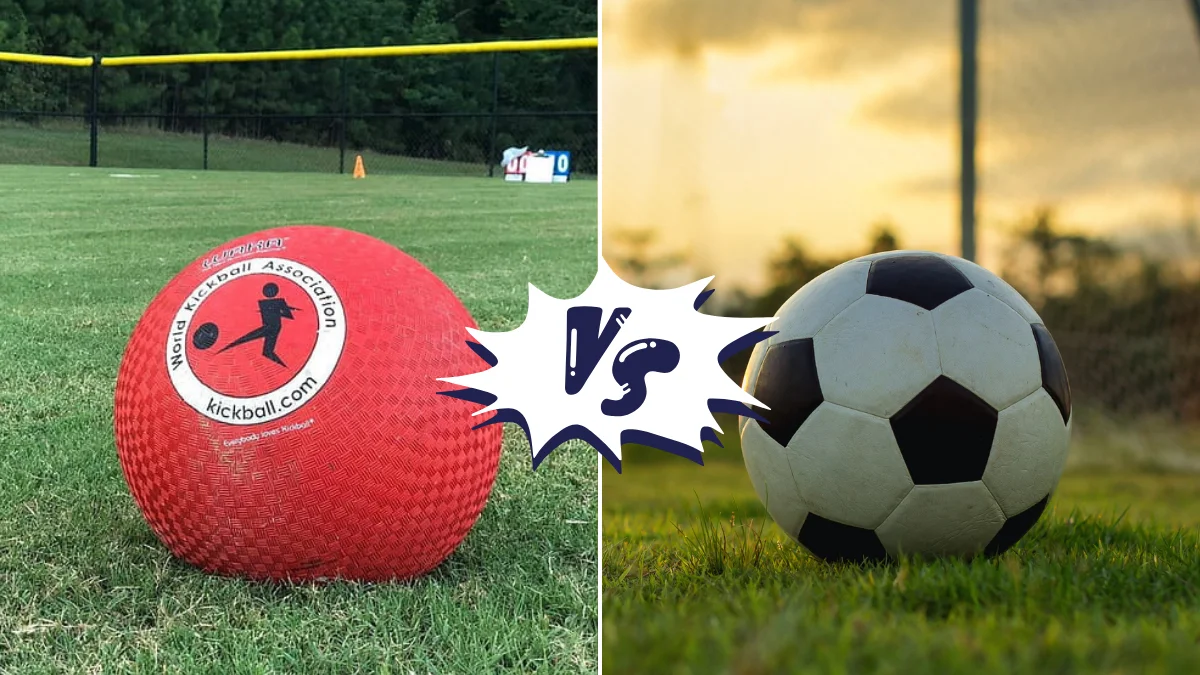
Soccer and kickball use similar balls, but they are different sports. Understanding their differences can enhance your appreciation of each game.
Soccer, a globally popular sport, involves kicking a ball to score goals in a net. It requires skill, strategy, and teamwork. On the other hand, kickball, often played in schools and parks, combines elements of baseball and soccer. Players kick a rubber ball to run bases and score.
Recognizing these differences helps you choose which game suits your interests or needs. Whether you enjoy the competitive nature of soccer or the casual fun of kickball, knowing their unique aspects can make your playing or watching experience more enjoyable. Let’s delve into the key differences between soccer balls and kickballs to better understand these popular games.
Key Features of Soccer Balls
Soccer and kickball are popular sports worldwide. Both use a ball, but the balls differ in many ways. Understanding the key features of a soccer ball helps explain these differences. Let’s dive into the details of the soccer ball’s construction materials and design and size.
Construction Materials
Soccer balls are made with specific materials to enhance their performance characteristics. The construction materials impact how the ball moves, feels, and lasts. Here are the main materials used:
- Outer Cover: The outer cover of a soccer ball is usually made of synthetic leather, often polyurethane (PU) or polyvinyl chloride (PVC). PU is softer and offers better control, while PVC is more durable and less expensive.
- Inner Lining: Inside the outer cover, multiple layers of polyester or cotton are used. These layers provide structure and help the ball maintain its shape.
- Bladder: The bladder holds the air and is typically made of latex or butyl. Latex offers better bounce but needs more frequent inflation. Butyl bladders retain air longer, making them more convenient for extended use.
Different playing surfaces can affect the choice of materials. For example, a ball used on grass fields might have a different outer cover compared to one used on artificial turf. Manufacturers consider the game rules and ball structure to ensure optimal performance.
| Component | Material | Characteristics |
|---|---|---|
| Outer Cover | PU or PVC | Softness, Durability |
| Inner Lining | Polyester or Cotton | Shape Retention, Structure |
| Bladder | Latex or Butyl | Bounce, Air Retention |
Design And Size
The design and size of a soccer ball follow strict guidelines, ensuring consistency in performance. These features are crucial for meeting game rules and providing a fair playing experience. Let’s break down the design and size aspects:
- Panels: Traditional soccer balls have 32 panels stitched together. Modern designs may vary with fewer or more panels to enhance aerodynamics and control.
- Stitching: High-quality soccer balls are hand-stitched, providing better durability and performance. Cheaper balls might be machine-stitched or even glued.
- Size: Soccer balls come in different sizes, usually 3, 4, and 5. Size 5 is the standard for adult matches, while sizes 3 and 4 are used for youth games.
- Weight: The weight of a soccer ball ranges between 410 to 450 grams for adult games. This standard ensures consistent performance across different matches.
The design also includes branding and graphics, which can influence the ball’s visibility and appeal. Manufacturers consider usage in sports and performance characteristics to create balls that meet various needs.
Understanding the design and size helps players choose the right ball for their game. Knowing these details ensures a better playing experience and adherence to game rules.
Kickball Basics
Soccer and kickball are popular sports, but they use different balls and have unique rules. Understanding the basics of kickball helps appreciate these differences. Let’s start with the ball itself.
Ball Composition
The kickball is made of rubber, which makes it flexible and durable. The rubber material allows the ball to bounce well on various surfaces, including grass and concrete. Here are some key points about kickball ball composition:
- Material: Typically, kickballs are made from natural or synthetic rubber.
- Texture: The surface of a kickball is usually smooth, making it easy to kick and catch.
- Durability: Rubber kickballs are designed to withstand rough play.
This composition contrasts with soccer balls, which are usually made from synthetic leather or other materials that provide a different feel and performance.
Size And Shape
Kickballs are larger and softer than soccer balls. This difference affects how each ball is used in their respective games. Let’s compare their size and shape:
| Feature | Kickball | Soccer Ball |
|---|---|---|
| Size | 8.5 to 10 inches in diameter | 8.6 to 8.8 inches in diameter |
| Weight | 14 to 17 ounces | 14 to 16 ounces |
| Shape | Perfectly round | Perfectly round |
The larger size of kickballs makes them easier to kick and catch, especially for younger players. Soccer balls, while similar in weight, are designed for more precise control and play.
Gameplay Differences
Soccer and kickball are both popular sports enjoyed by people of all ages. They might seem similar at first glance, but they have distinct differences. Let’s explore the gameplay differences between soccer and kickball, focusing on the playing field setup and the rules of play.
Playing Field Setup
The setup of the playing field is one of the primary differences between soccer and kickball. While both sports are played on a field, the dimensions and markings vary significantly.
Soccer:
- The field is rectangular and can range from 100 to 130 yards in length and 50 to 100 yards in width.
- There are specific markings, including the center circle, penalty boxes, and goal areas.
- Goals are placed at each end of the field, and are 8 feet high and 8 yards wide.
Kickball:
- The field is similar to a baseball diamond, with four bases placed in a diamond shape.
- The distance between bases is usually 60 feet.
- Home plate, first base, second base, and third base form the key areas of the field.
While soccer fields are larger and have more complex markings, kickball fields are smaller and resemble baseball fields. These differences impact the gameplay and strategies used in each sport.
Rules Of Play
The rules of play for soccer and kickball are also different, affecting how each game is played.
Soccer:
- Each team has 11 players, including a goalkeeper.
- The game is played in two halves, each lasting 45 minutes.
- Players can only use their feet, head, and body to control the ball. Only the goalkeeper can use their hands within the penalty area.
- The objective is to score by getting the ball into the opponent’s goal.
Kickball:
- Each team usually has 8-11 players.
- The game is played in innings, similar to baseball, with each team taking turns to kick and field.
- Players kick a rolled ball and run to bases to score runs.
- Fielding players can throw the ball to tag base runners or directly tag them out.
Soccer’s focus is on continuous play and ball control with feet, while kickball emphasizes running bases and tagging players out. These rule differences create unique experiences for players and fans alike.
Player Positions and Roles
Soccer and kickball are both popular games, but they have different player positions and roles. Understanding these differences can enhance your appreciation and enjoyment of each sport. Let’s delve into the player positions and roles in soccer and kickball.
Soccer Player Positions
Soccer is a game that requires precise positions and roles for each player. The team is divided into four main areas: forwards, midfielders, defenders, and the goalkeeper. Each area has specific responsibilities and strategies.
- Forwards: These players are responsible for scoring goals. They stay near the opponent’s goal and use their speed and skills to take shots.
- Midfielders: They control the game’s flow. They link the defense and the attack, often covering the most ground on the field.
- Defenders: Their main job is to stop the opposing team’s forwards from scoring. They stay near their goal and use tackles and interceptions.
- Goalkeeper: The only player allowed to use their hands. The goalkeeper’s role is to prevent the ball from entering the net.
Each position has a unique role that contributes to the team’s overall strategy. The soccer game positions require teamwork and communication. The soccer ball differences also play a role, as soccer balls are designed for specific types of play and control.
| Position | Role |
|---|---|
| Forwards | Scoring goals |
| Midfielders | Controlling the game flow |
| Defenders | Stopping goals |
| Goalkeeper | Preventing goals |
Kickball Player Roles
Kickball, similar to baseball, has different player roles. The game is simpler in terms of positions, but each role is crucial. The main positions include pitcher, catcher, baseman, shortstop, and outfielder.
- Pitcher: This player rolls the ball to the kicker. The goal is to make the ball easy or challenging to kick based on strategy.
- Catcher: Positioned behind the kicker to catch any missed kicks. The catcher also helps make outs at home plate.
- Basemen: These players cover first, second, and third base. They catch the ball to make outs and prevent runners from advancing.
- Shortstop: Positioned between second and third base. The shortstop helps field balls and makes quick plays to get outs.
- Outfielders: They catch long kicks and prevent the ball from going too far. They also throw the ball back to the infield to make plays.
The roles in kickball focus on fielding and making outs. The kickball field layout is similar to a baseball diamond, making the positions easy to understand. Kickball rules are straightforward, emphasizing teamwork and coordination.
| Position | Role |
|---|---|
| Pitcher | Rolling the ball to the kicker |
| Catcher | Catching missed kicks |
| Basemen | Covering bases |
| Shortstop | Fielding between bases |
| Outfielders | Catching long kicks |
Understanding the kickball team dynamics helps players know their roles and how to work together. Despite the simplicity of kickball, each role is essential for a successful game.
Scoring Systems
Soccer and kickball may seem similar at first glance, but they have distinct differences, especially in how players score points. Understanding these scoring systems is crucial to appreciating each sport’s unique appeal. Let’s delve into the scoring methods for soccer and kickball to see how they differ.
Soccer Scoring Methods
In soccer, the primary objective is to score goals. A goal is scored when the ball completely crosses the goal line between the goalposts and beneath the crossbar. Here are some key points about soccer scoring:
- Goals are worth one point each.
- The team with the most goals at the end of the match wins.
- If the score is tied, the match may end in a draw, or proceed to extra time and possibly a penalty shootout, depending on the competition rules.
Additional rules and situations:
- If a player is offside when the ball is played to them, any goal scored will not count.
- Goals can be scored from open play, direct free kicks, penalty kicks, and even corner kicks.
Common terms in soccer scoring:
| Term | Definition |
|---|---|
| Goal | Scoring by getting the ball into the opponent’s net. |
| Offside | A player is in an offside position if they are nearer to the opponent’s goal line than both the ball and the second-last opponent when the ball is played to them. |
| Penalty Kick | A free shot at goal from the penalty spot, awarded for certain fouls in the penalty area. |
Kickball Scoring Rules
Kickball, often played in schools and recreation leagues, has a simple yet unique scoring system. Here are the basics of kickball scoring:
- Runs are scored when a player successfully reaches home plate after touching all four bases in order.
- Each run is worth one point.
- The team with the most runs at the end of the game wins.
Inning structure and scoring details:
- Each game typically consists of several innings, with both teams getting a chance to kick (offense) and field (defense) in each inning.
- A standard game usually has 6 or 7 innings, but this can vary.
- During their turn to kick, the offensive team tries to score as many runs as possible before they accumulate three outs.
Key terms in kickball scoring:
| Term | Definition |
|---|---|
| Run | Scoring by successfully reaching home plate. |
| Inning | A division of the game during which each team gets a turn to kick and field. |
| Out | Occurs when a player is retired by the opposing team, preventing them from scoring. |
In essence, both sports aim to outscore the opponent, but their unique rules and methods make each game distinct and exciting in its own right.
Cultural Impact
Soccer and kickball are popular sports. They have a significant impact on cultures. While soccer is a global phenomenon, kickball thrives in local communities. Understanding their cultural impact gives insight into their popularity and significance.
Soccer Around The World
Soccer is known as football in many countries. It is the most popular sport globally. It is more than just a game; it is a part of many cultures. Here are some ways soccer impacts the world:
- National Pride: Countries take pride in their national soccer teams. Winning tournaments like the World Cup can unite a nation.
- Economic Impact: Soccer generates billions of dollars. It creates jobs, boosts tourism, and drives merchandise sales.
- Social Integration: Soccer brings people together. It bridges cultural and social divides. In many countries, children from different backgrounds play together.
Below is a table showing soccer’s popularity by continent:
| Continent | Popularity |
|---|---|
| Europe | Very High |
| South America | Very High |
| Africa | High |
| Asia | Growing |
| North America | Moderate |
Soccer also inspires art, music, and fashion. Famous players become cultural icons. Their influence extends beyond the field. They inspire young fans to achieve their dreams.
Kickball in Local Communities
Kickball is especially popular in local communities. It is often played in schools and neighborhoods. It has a different cultural impact compared to soccer. Here are some aspects of kickball’s cultural significance:
- Community Engagement: Kickball brings families and friends together. It fosters a sense of community and belonging.
- Accessible Sport: Kickball is easy to play. It requires minimal equipment. This makes it accessible to all age groups and economic backgrounds.
- School Programs: Many schools include kickball in their physical education programs. It promotes physical fitness and teamwork among students.
Kickball games are often informal and less competitive. They focus on fun and participation. This makes it appealing to a wide range of people. Below is a comparison between soccer and kickball:
| Aspect | Soccer | Kickball |
|---|---|---|
| Global Reach | High | Low |
| Equipment Needed | Soccer Ball, Goals | Kickball |
| Formality | Formal Leagues | Informal Games |
| Competitiveness | High | Low |
Kickball helps build important life skills. Teamwork, communication, and sportsmanship are key lessons. Its simplicity and inclusivity make it a beloved activity in many communities.
Popularity and Participation
Soccer and kickball are two popular sports with distinct differences. One major difference is their popularity and participation rates. Both sports enjoy widespread play, but there are unique aspects that set them apart in terms of how many people play and where they are most loved.
Soccer Participation Rates
Soccer is the most popular sport in the world. Millions of people play soccer across the globe. The participation rates in soccer are remarkably high due to several factors:
- Global Reach: Soccer is played in almost every country. It is especially popular in Europe, South America, and Africa.
- Youth Programs: Many countries have youth soccer programs. These programs encourage children to start playing at a young age.
- Professional Leagues: There are numerous professional soccer leagues worldwide, like the English Premier League and Major League Soccer. These leagues inspire many to play soccer.
Here’s a quick look at soccer participation rates by region:
| Region | Participation Rate |
|---|---|
| Europe | 45% |
| South America | 35% |
| Africa | 30% |
| North America | 25% |
| Asia | 20% |
These numbers show the immense popularity of soccer worldwide. It is a sport that brings people together across different cultures and regions.
Kickball Popularity Trends
Kickball is also popular, especially in the United States. It is often seen as a fun, recreational sport. Unlike soccer, kickball’s popularity trends are more localized:
- School Playgrounds: Kickball is a common game in American schools. It is easy to play and does not need much equipment.
- Adult Leagues: There are many adult kickball leagues. These leagues provide an opportunity for social interaction and exercise.
- Community Events: Kickball is a popular choice for community events and picnics. It is a game that people of all ages can enjoy together.
Kickball’s popularity trends can be summarized as follows:
| Setting | Popularity |
|---|---|
| Schools | High |
| Adult Leagues | Moderate |
| Community Events | Moderate |
Kickball may not have the global reach of soccer, but it holds a special place in American culture. It is a sport that emphasizes fun and inclusivity.
Equipment and Gear
Soccer and kickball may seem similar at first glance, as both involve kicking a ball to score points. But the equipment and gear used in each sport highlight their differences. Understanding these differences can help you choose the right gear for each game and enhance your playing experience.
Soccer Gear Essentials
Soccer requires specific gear designed to enhance player performance and safety. Here’s a breakdown of the essential soccer gear:
- Soccer Ball: Made from synthetic leather with an inner bladder, sizes vary based on age groups.
- Cleats: Specialized shoes with studs for better grip on grass or turf fields.
- Shin Guards: Protect the shins from impacts and kicks during the game.
- Soccer Socks: Long socks that cover the shin guards for added protection and comfort.
- Goalkeeper Gloves: Worn by goalkeepers to improve grip and protect hands from powerful shots.
- Uniform: Includes a jersey, shorts, and sometimes padded gear for added protection.
Here’s a quick comparison of soccer gear:
| Equipment | Purpose |
|---|---|
| Soccer Ball | Playing the game |
| Cleats | Traction and stability |
| Shin Guards | Protection |
| Goalkeeper Gloves | Hand protection and grip |
Kickball Equipment Needs
Kickball is a simpler sport in terms of equipment. The gear needed for kickball is minimal compared to soccer. Here’s what you need:
- Kickball: A rubber ball, typically larger and softer than a soccer ball.
- Comfortable Shoes: Athletic shoes or sneakers, as cleats are not required.
- Casual Wear: Comfortable clothing like T-shirts and shorts or pants.
While kickball gear is straightforward, here’s a quick look at the essentials:
| Equipment | Purpose |
|---|---|
| Kickball | Main playing equipment |
| Comfortable Shoes | Running and kicking |
| Casual Wear | Comfort and ease of movement |
While soccer requires more specialized gear, kickball is more relaxed, making it accessible for casual play.
Frequently Asked Questions
What is A Soccer Ball Made Of?
A soccer ball is typically made of synthetic leather. It has an inner bladder for air retention. Panels are stitched or glued together.
How is Kickball Played?
Kickball is played similar to baseball. Players kick a rubber ball instead of hitting it. The field setup is similar.
Are Soccer And Kickball Rules Different?
Yes, soccer rules involve dribbling and passing with feet. Kickball rules follow baseball-like gameplay with bases and innings.
Which Ball is Larger, Soccer Or Kickball?
A kickball is generally larger than a soccer ball. Soccer balls come in standard sizes, while kickballs are more variable.
Concluding Words
Soccer and kickball differ in rules, equipment, and playing style. Soccer uses a round ball; kickball uses a rubber ball. Players in soccer aim to score goals using their feet. In kickball, players kick the ball and run bases. Both sports offer great fun and exercise.
Understanding these differences helps you choose which to play. Enjoy the game that suits you best!